
Views: 0 Author: Site Editor Publish Time: 2026-07-09 Origin: Site
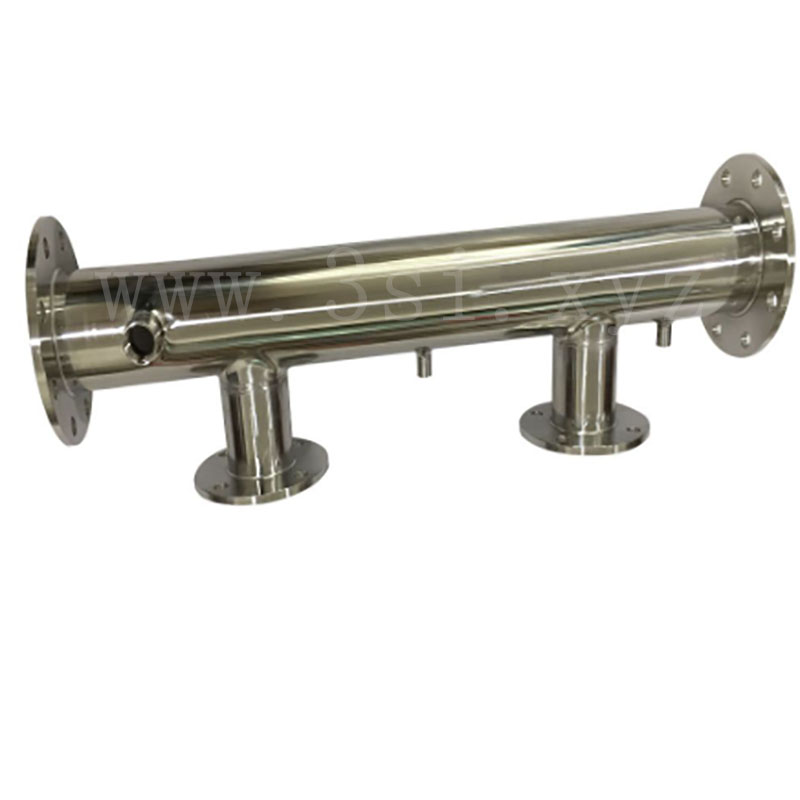
Even the most carefully designed manifold can underperform if manufacturing tolerances, internal burrs, or assembly errors compromise flow characteristics. Performance testing before installation identifies potential issues before they impact production.
Why Flow Testing Matters:
Detects internal obstructions invisible to visual inspection
Verifies flow balance across multiple outlets
Confirms pressure drop within acceptable limits
Identifies leaks that pass static pressure tests
Provides baseline data for future condition monitoring
Types of Flow Testing:
1. Flow Rate Verification
Measures actual flow through each port to confirm design specifications.
Equipment Required:
Calibrated flow meters (turbine, vortex, or Coriolis types)
Pressure regulators
Temperature sensors
Data logging capability
Acceptance Criteria:
Flow rate within ±5% of design value for each outlet
Consistent flow across all ports (balance within ±10%)
2. Pressure Drop Measurement
Measures pressure loss from inlet to outlet at design flow rate.
Equipment Required:
Pressure transducers (0-10V or 4-20mA output)
Data acquisition system
Flow control valve for rate adjustment
Acceptance Criteria:
Pressure drop not exceeding design specification
Acceptable pressure drop: 3-5 psi typical for liquid, 0.5-2 psi for gas
3. Pressure Decay Testing
Measures pressure loss over time with system sealed.
Equipment Required:
Precision pressure gauge (0.1% accuracy)
Timer
Shut-off valves
Procedure:
Isolate manifold section
Pressurize to test pressure
Close isolation valves
Monitor pressure over 5-10 minutes
Record any decay beyond allowable tolerance
Acceptance Criteria:
Zero pressure decay over test duration (gas)
Less than 0.5% pressure loss (liquid)
4. Flow Balance Verification
For multi-outlet manifolds, confirms even distribution to all ports.
Method:
Connect flow meters to each outlet
Measure flow with all outlets open
Compare measurements across stations
Acceptance Criteria:
All outlets within ±15% of average flow
Critical outlets within ±5% of target
Test Conditions vs. Operating Conditions:
| Parameter | Test Condition | Operating Condition |
|---|---|---|
| Fluid | Water or oil | Actual process fluid |
| Temperature | Ambient | Process temperature |
| Pressure | 1.0-1.5x rated | Design pressure |
| Flow Rate | Design rate | Variable operation |
When Test Conditions Differ from Operating:
In many cases, testing with water is impractical for actual products intended for gas or other fluid services. When test media differs, consider:
Viscosity differences affecting pressure drop
Corrosion protection for test media removal
Compatibility of test media with seals and materials
3S International Testing Protocol:
Every manifold receives:
100% visual inspection (external and internal via borescope)
Hydrostatic pressure test at 1.5x rated pressure
Pneumatic leak test (submerged or pressure decay)
Flow testing on custom configurations
Documentation includes test results with traceability to specific serial numbers.
Testing Service: Request flow test documentation with your manifold order. We provide acceptance criteria customized to your application requirements.

 FEEDBACK