
Views: 0 Author: Site Editor Publish Time: 2026-09-04 Origin: Site
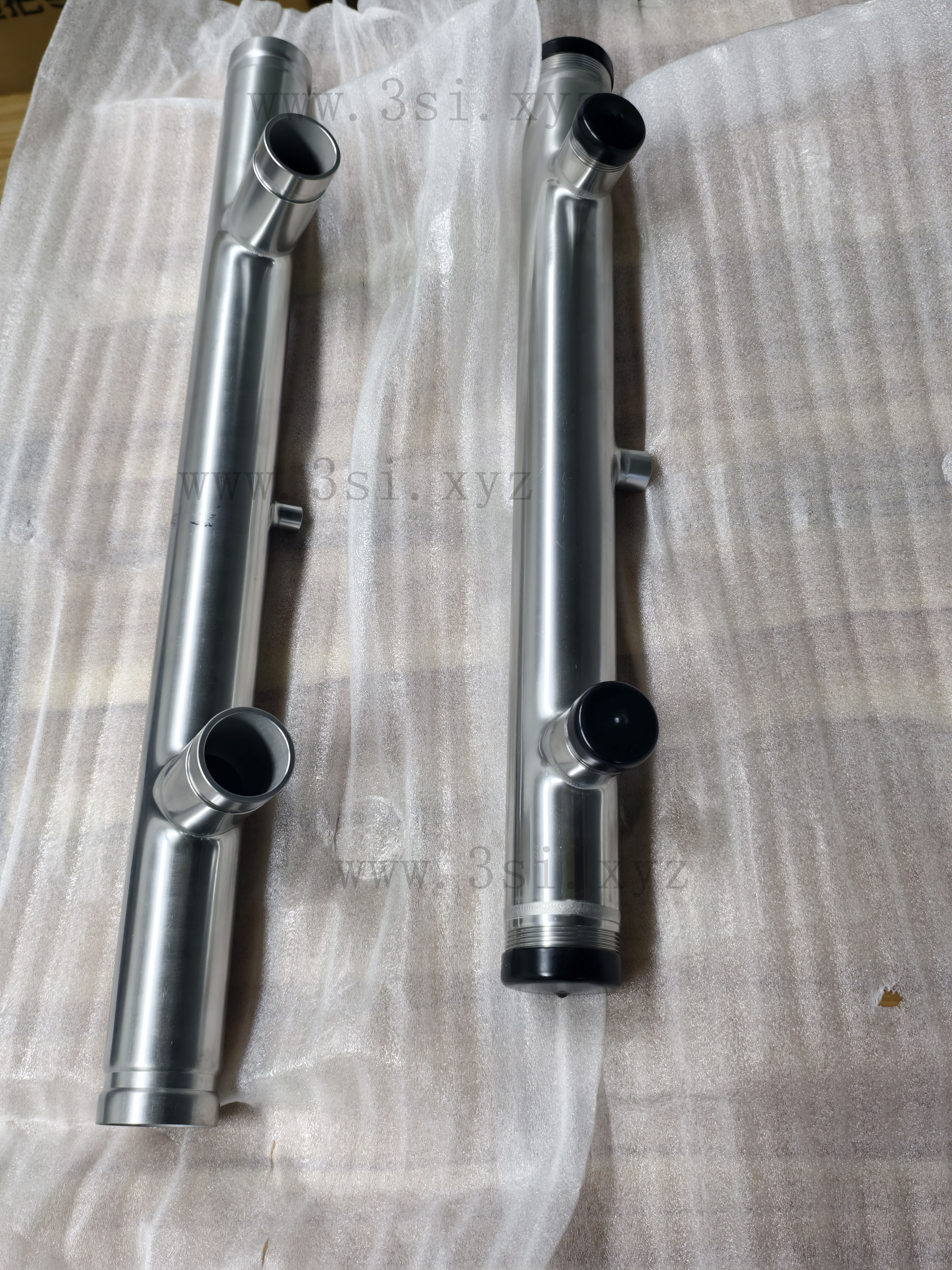
When a pressure transmitter fails early or a gauge gives unstable readings, the instrument itself is often not the culprit. The real problem often sits just below the instrument — the wrong pressure instrument manifold, or no manifold at all. The manifold is a small component, but it decides how safely you can isolate, equalize, calibrate, and vent your pressure instrument without shutting the line .
What Does an Instrument Manifold Actually Do?
A manifold combines isolation, equalization, venting, and test connections into one compact block mounted between the process line and the instrument. Instead of fabricating 3-4 separate valves with fittings (more joints = more leak points), a single manifold gives you:
Isolation: Service the instrument without depressurizing the line
Equalization: Protect differential pressure (DP) instruments from one-sided overpressure during start-up
Venting/Draining: Safely release trapped pressure before removal
Test port: Inject calibration pressure in-situ
2-Valve Manifold — For Gauge Pressure Instruments
| Feature | Detail |
|---|---|
| Valves | 1 isolation + 1 vent/test |
| Used with | Pressure gauges, pressure transmitters (gauge type), pressure switches |
| Typical service | Pump discharge, compressor lines, steam (with siphon), process headers |
| Why it matters | Lets you calibrate or replace the instrument live, without line shutdown |
If you are installing a pressure gauge or gauge-pressure transmitter on a process line, a 2-valve manifold is the minimum good practice. Direct-mounting with only a root valve means every calibration becomes a small shutdown.
3-Valve Manifold — For DP Transmitters
| Feature | Detail |
|---|---|
| Valves | 2 isolation (HP & LP) + 1 equalizing |
| Used with | Differential pressure transmitters — flow (orifice/venturi), level, filter DP |
| Critical function | Equalizing valve prevents one-sided pressurization that can shift the cell zero or damage the diaphragm |
The start-up sequence matters, and this is where most field damage happens: open equalizer → open HP isolation → close equalizer → open LP isolation. Reverse for shutdown. Skipping the equalizing step on a high static-pressure line is the most common cause of DP cell zero-shift seen in the field.
5-Valve Manifold — For DP with Vent/Test
| Feature | Detail |
|---|---|
| Valves | 2 isolation + 1 equalizing + 2 vent/test |
| Used with | DP transmitters on high static pressure, toxic, or critical service; custody metering |
| Extra capability | Vent trapped pressure safely and inject test pressure on both sides for in-situ calibration |
On refinery and chemical plant service, 5-valve manifolds are standard practice for DP flow measurement.
Quick Selection Table
| Application | Recommended Manifold |
|---|---|
| Pressure gauge / gauge transmitter | 2-valve |
| DP transmitter (flow, level) — general | 3-valve |
| DP transmitter — high pressure / critical / calibration in-situ | 5-valve |
| Remote-mounted with impulse tubing in dirty service | Add condensate pots / purge as per hook-up drawing |
Common Hook-up Mistakes to Avoid:
Equalizing valve never used during start-up (zero-shift, diaphragm damage)
PTFE packing on steam service (leaks within months — use graphite)
No vent valve on toxic service (unsafe instrument removal)
Carbon steel manifold on a corrosive line because "it was in stock"
Impulse line slope wrong for the medium (gas: slope up to instrument; liquid/steam: slope down) -.
3S International Instrument Manifold Solutions:
Our instrument manifolds are available in 2-valve, 3-valve, and 5-valve configurations. We match the manifold type to your instrument (2-valve for gauge, 3/5-valve for DP) and the material to your process, ensuring compatibility and reliable performance.

 FEEDBACK